Skewed vs Spread Protein Intake: Net Protein Balance Data
Moving beyond acute muscle protein synthesis responses to single meals, this article examines research investigating whole-day outcomes: the net balance between protein synthesis and breakdown. Understanding net protein balance—the cumulative difference between new protein produced and protein degraded—provides crucial context for interpreting protein distribution effects.
Net Protein Balance: Definition and Measurement
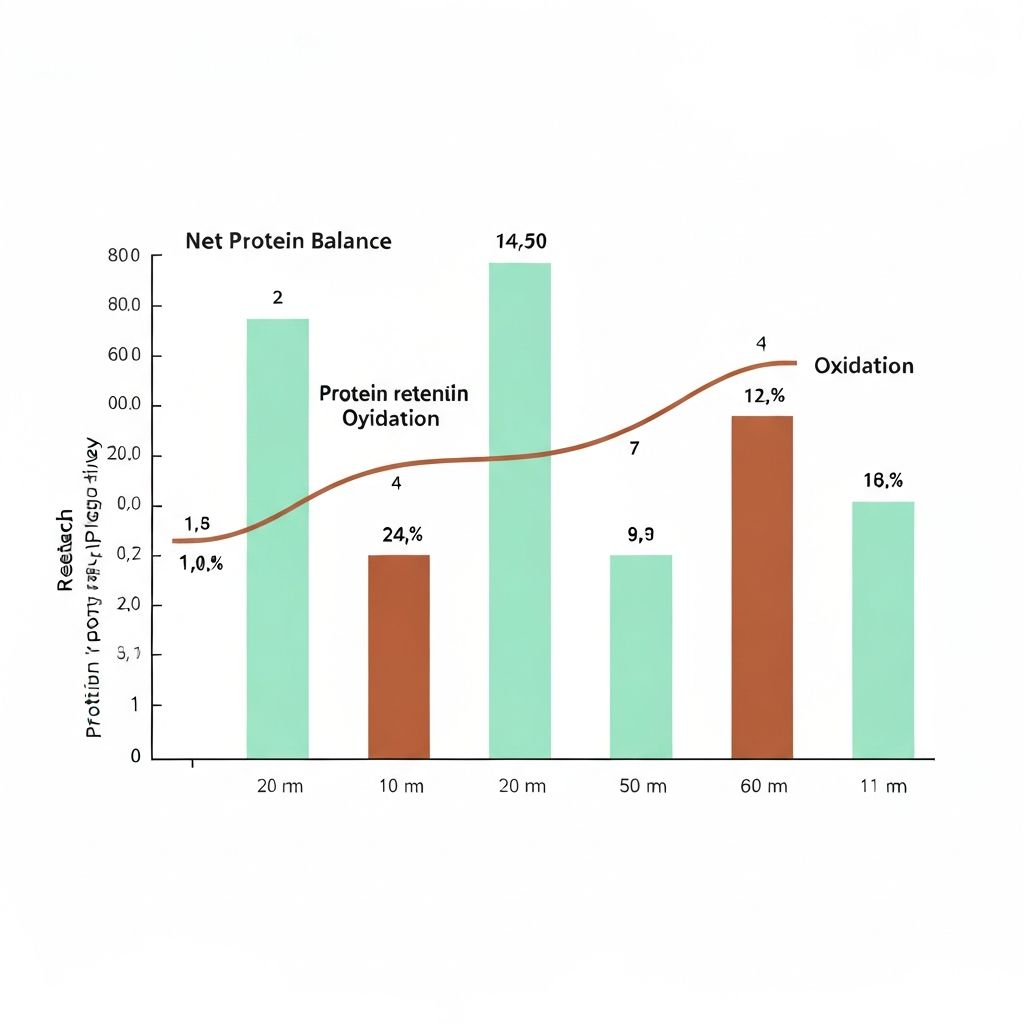
While muscle protein synthesis represents only half of the protein balance equation, the complete picture requires simultaneously tracking protein breakdown. Net protein balance equals muscle protein synthesis minus muscle protein breakdown (proteolysis). A positive balance (synthesis exceeding breakdown) accumulates net protein; negative balance (breakdown exceeding synthesis) results in net protein loss.
Research measuring both directions of protein turnover employs sophisticated methodologies tracking labeled tracers through both synthesis and breakdown pathways. Studies inject isotopically-labeled amino acids and measure the rate at which these tracers appear in new muscle protein (synthesis) and the rate at which breakdown products containing labels appear in circulation (proteolysis). From these measurements, researchers calculate both unidirectional rates and net balance.
Whole-day net balance integrates all meals, all inter-meal periods, and the entire fasting overnight interval. This comprehensive approach provides more ecologically valid information than acute response measurement alone.
Meal-Specific Effects on Protein Breakdown
Protein breakdown (proteolysis) is not constant but rather responds dynamically to nutrient status. Fed states (presence of amino acids in circulation) suppress proteolysis; fasting states (low circulating amino acids) permit or accelerate proteolysis. This regulation makes biological sense: when dietary amino acids are available, the organism preferentially utilizes these exogenous sources rather than catabolizing endogenous muscle protein for amino acids.
Breakdown Suppression by Adequate Meals
Consuming a meal containing adequate protein produces two concurrent effects: elevation of synthesis (discussed extensively in previous articles) and simultaneous suppression of breakdown. The magnitude of breakdown suppression depends substantially on amino acid quantity and quality. Meals providing adequate essential amino acids and leucine produce robust breakdown suppression; meals insufficient in these components show attenuated breakdown suppression.
This breakdown suppression represents a mechanistic pathway through which adequate protein consumption supports positive net balance—not only through enhanced synthesis but also through reduced protein loss.
The duration of breakdown suppression extends somewhat beyond the elevation of synthesis. While MPS typically returns toward baseline 120-150 minutes post-meal, suppression of breakdown may persist for 3-4 hours. This extended effect reflects the duration of elevated circulating amino acid concentrations from the meal.
Inter-Meal Fasting and Protein Balance
The intervals between meals represent periods where circulating amino acid concentrations decline. As fed-state nutrient availability decreases, breakdown suppression diminishes, and proteolysis increases toward fasting rates. During extended fasting periods, particularly overnight sleep, protein breakdown substantially exceeds synthesis, producing negative net balance.
This nightly negative balance represents a consistent daily phenomenon. The magnitude depends on the duration of overnight fasting (typically 8-10 hours) and pre-sleep meal composition. Higher protein intake in the evening meal modestly reduces overnight protein loss through several mechanisms: prolonged amino acid availability, extended breakdown suppression, and potentially modest synthesis elevation throughout the night.
Cumulative Daily Balance
Whole-day net protein balance equals the summation of positive balances (synthesis exceeding breakdown) during and immediately post each meal, plus negative balances (breakdown exceeding synthesis) during inter-meal fasting periods. To achieve positive net daily balance, the meals consumed must collectively produce sufficient positive balance to exceed the negative balance accumulated during fasting intervals.
Research Findings: Even vs Skewed Distribution
Young Adults with Even Distribution
Three meals containing 25-30 grams protein each, consumed at approximately 5-hour intervals, typically produce three periods of positive net balance (synthesis exceeding breakdown) of 2-4 hours duration each. Inter-meal intervals of 4-5 hours produce modest negative balance periods. Overnight fasting produces negative balance. Net cumulative daily balance depends on the magnitude of positive balances during meals exceeding the cumulative negative balance during fasting periods.
Young Adults with Skewed Distribution
Two meals containing 40 grams and 20 grams protein, consumed at 8-hour separation (e.g., breakfast and dinner), produce two periods of positive balance separated by a longer 7-8 hour inter-meal interval. During this extended interval, negative balance accumulates. The longer overnight fast produces substantial negative balance. Compared to even distribution, skewed distribution produces fewer but longer periods of positive balance separated by more extended negative balance intervals.
When researchers calculate cumulative daily net balance in young adults with adequate total protein intake (60-75 grams daily), studies consistently find comparable net balances between even and skewed distributions. Despite the striking differences in temporal pattern—multiple short positive intervals versus fewer longer intervals—total daily positive balance often reaches similar magnitudes.
Older Adults and Distribution Effects on Net Balance
In older adults experiencing anabolic resistance, distribution pattern potentially assumes greater importance for net protein balance. Each meal produces a smaller positive balance magnitude due to attenuated MPS and delayed breakdown suppression. However, the mechanisms underlying these differences create an argument for even distribution:
Multiple Threshold Opportunities
If individual older adults require 3-4 grams of leucine to activate adequate MPS, and if meals below this threshold fail to substantially elevate synthesis, then ensuring that multiple meals during the day exceed this threshold maximizes opportunities for positive balance periods. Skewed distribution providing only one or two meals exceeding the threshold reduces the number of synthesis-stimulating opportunities.
Extended Fasting Periods
Older adults show prolonged negative balance periods during extended fasting compared to younger adults due to attenuated suppression of proteolysis by any single amino acid stimulus. Longer inter-meal intervals mean longer cumulative negative balance. More frequent adequate-protein meals interrupt these negative balance periods more frequently, potentially moderating daily negative balance accumulation.
Research specifically comparing net protein balance in older adults receiving even versus skewed distribution shows more consistent advantage for even distribution in this population compared to younger cohorts. The difference appears modest but meaningful—perhaps 5-15% greater cumulative daily positive balance with even distribution.
Amino Acid Oxidation and Metabolic Fate
Beyond the synthesis-breakdown balance, research examining amino acid metabolic fate reveals additional complexity. Amino acids provided in excess of incorporation into protein undergo oxidation—breakdown to produce energy or conversion to other metabolic compounds. The fraction of dietary amino acids oxidized versus incorporated into protein depends on total protein quantity and the presence of other macronutrients.
Meals providing adequate protein but insufficient total calories show higher amino acid oxidation relative to incorporation, reducing efficiency of dietary protein utilization for tissue building. Adequate caloric balance, typically through carbohydrate and fat provision, reduces amino acid oxidation and increases the fraction incorporated into protein. This metabolic context interacts with protein distribution effects: distribution patterns that promote efficient protein retention require appropriate total caloric intake.
Oxidation Rates and Distribution
Studies tracking amino acid oxidation rates observe that very large single meals produce higher amino acid oxidation than multiple moderate meals of equivalent total protein. This reflects the dose-dependent activation of amino acid oxidation pathways. This finding suggests that even distribution may produce slightly more efficient amino acid utilization for protein retention compared to concentrated distribution, all else equal.
Integration of Synthesis, Breakdown, and Metabolic Fate
Comprehensive understanding of protein distribution effects requires integrating these multiple factors: synthesis activation, breakdown suppression, and metabolic fate of amino acids. Different distribution patterns produce distinctly different temporal profiles across all these dimensions.
Even distribution produces: frequent synthesis peaks of moderate magnitude, frequent breakdown suppression periods, and distributed amino acid oxidation across meals. Skewed distribution produces: fewer, larger synthesis peaks, less frequent breakdown suppression, extended fasting-induced positive proteolysis, and concentrated amino acid oxidation in large meals.
The integrated consequence—net daily protein balance—tends toward similarity in young adults despite these profound temporal differences. In older adults and potentially in sedentary individuals, the more frequent nutrient stimulation provided by even distribution may produce measurably superior net balances.
Practical Implications
The research on net protein balance and distribution provides several key insights:
Adequacy Remains Primary
Total daily protein intake remains more important than distribution pattern for achieving positive net balance in most populations. A day with adequate protein distributed almost any way typically achieves positive balance; inadequate total protein results in negative balance regardless of distribution sophistication.
Age and Activity Status Modify Distribution Importance
Younger, physically active individuals achieve comparable net balances across diverse distribution patterns. Older or sedentary individuals may achieve meaningfully better net balances through distributions ensuring adequate-dose meals frequently throughout the day.
Caloric Context Matters
Net protein balance depends not only on protein distribution but also on overall caloric balance. Severe caloric restriction reduces protein retention efficiency regardless of distribution pattern. Adequate or slight energy surplus optimizes protein retention.
Conclusion
Net daily protein balance—the cumulative difference between protein synthesis and breakdown—provides a comprehensive outcome measure for evaluating protein distribution effects. Research shows that in younger adults, cumulative daily net balance remains similar across even and skewed distribution patterns when total protein is adequate. In older adults experiencing reduced anabolic sensitivity, even distribution may provide modest advantages through more frequent opportunities for synthesis stimulation and shorter intervals of negative balance.
The mechanisms underlying distribution effects on net balance operate through multiple pathways: synthesis activation, breakdown suppression, and amino acid metabolic fate. Effective protein retention requires adequate total intake; within adequate ranges, distribution patterns represent a secondary optimization that may meaningfully benefit specific populations.
Educational content only. This article presents scientific explanations without offering individual recommendations or guarantees regarding personal outcomes.
Back to research articles